I practice Aikido, a Japanese martial art. Have for about twenty-five years now.
On the dojo mat, we wear a keikogi which we call a gi for short, and a hakama, which is essentially a split-pant skirt-like garment. Depending on the dojo you train at, there are different guidelines for when one might start wearing the hakama – attaining a certain rank, or after a certain number of years training, etc.; I’ve been wearing one since 3rd kyu (which was quite a while ago now).
Part of wearing a hakama is folding it properly after training, so that you maintain the pleats and keep it in good shape for as long as possible (these things can be expensive). It’s also part of the etiquette of practice.
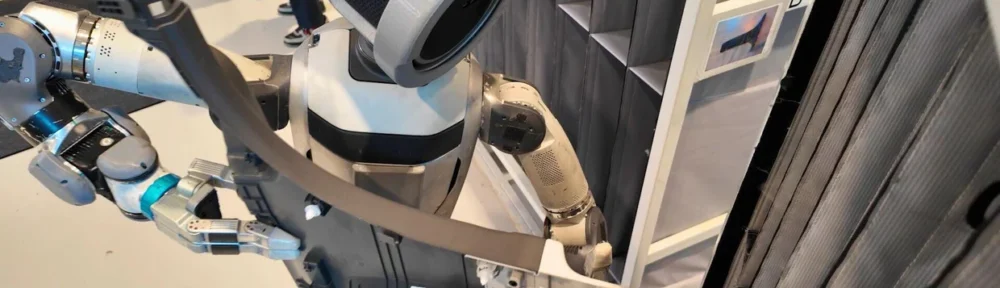
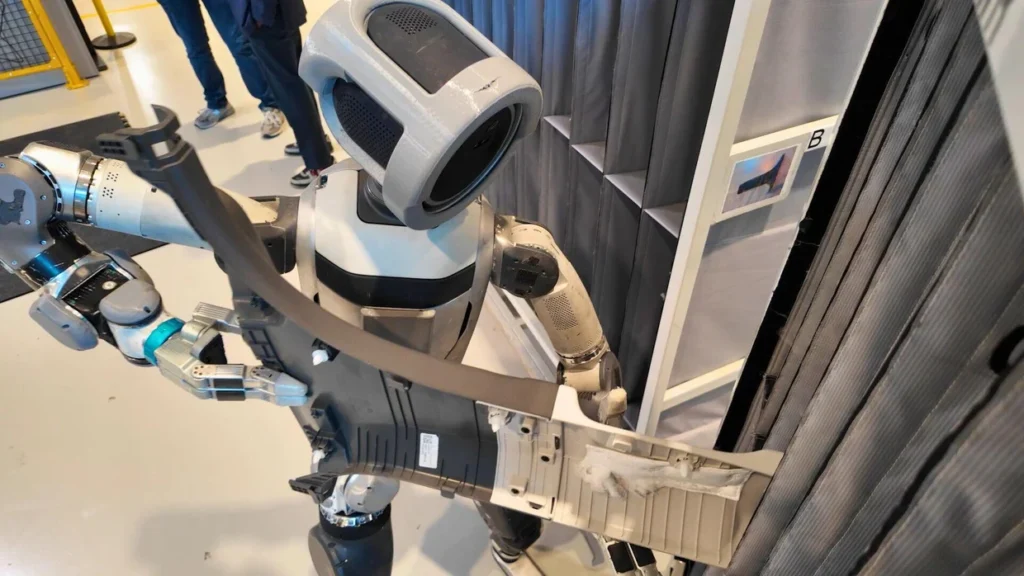
I mention this as a prelude to a thought experiment: imagine that one of the several Silicon Valley startups now proselytizing about AI, and the tech-driven panacea that they swear is just over the horizon, produced a robot that can accurately fold a hakama in a matter of seconds. A time saver. Great. But, should I use it?
Much has been written in the past few months as the tsunami of Artificial Intelligence, Large Language Models (LLMs), and the seemingly inevitable march of technological progress has swept into our cultural mainland with astounding force and speed. And while some of this criticism has called out the threat to jobs as well as the appropriation of unpaid human creativity and productivity that LLMs guzzle up and regurgitate when prompted, I want to highlight the part of this “progress” that troubles me the most.
I recently came across an episode of Autumn Brown and adrienne maree brown’s How to Survive the End of the World podcast, which originally aired August 1, 2025, with guest Rebecca Solnit, the writer, activist and historian.
While talking about a model of reciprocity between humans and nature – vs. a capitalist consumption and “services” model which is a mono-directional and destructive relationship – Solnit goes on a slight tangent, saying:
“There’s this thing that keeps coming up on social media where techies are trying to insist that somehow getting a burrito delivered is necessary because making a burrito is so hard and wasteful… And it’s funny because I could balance Suzuki, Roshi, and Zen, chop wood, carry water, where the everyday tasks ground us, make us, invite us to be fully present, to live in our senses, to be of service, to be connected in ways that the burrito delivered by Grubhub doesn’t… ”
(the whole episode, “The Revolution Will Be Incremental with Rebecca Solnit”, is worth a listen)
This passage perfectly encapsulates for me the real issues with AI. It’s not the technology, which may in the long run bring some very tangible benefits to humankind (see: cancer research). Technology tends to be benign. Yes, automobiles impacted eco-systems, and television impacted family dinnertime, but the harms we incur from new modes of transportation or media formats, tend to be where technology meets capitalism.
Technology super-charges the motives embedded in capitalist ideology – a focus on increasing profit above all other considerations, such as safety, quality of life, diversity of human experience and expression, etc. Through a capitalist lens, purpose and meaning – things that I would argue most separate us humans – slightly – from the rest of life on this planet as we know it – take a back seat to utility.
Not long after hearing Solnit on the Survive podcast, I came across an NPR story looking at the use of AI in therapy [Therapists are using AI to take notes. Is it a useful tool or a breach of trust?, by Windsor Johnston • May 26, 2026].
The article explores the privacy concerns of clients, as well as the impact on trust and honesty in sessions where conversations more and more are being recorded. While these recordings are meant to assist the clinician with the administrative aspects of their practice, they can be a barrier to the authentic, trust-based relationship between them and their clients.
In the article, a therapist, Kym Tolson, who works fully remote and brands her work as “The Traveling Therapist,” talks about using AI to offset the administrative overhead of her practice. She states: “Most clinicians spend about 10 hours a week on administrative tasks, and five to seven of that is documentation… with the AI system, I spend about two minutes per client where it used to take me 15 to 20.” She then adds: “It’s given me my life back… I don’t have notes following me around, haunting me. After I see my client, I review the note, sign it and I’m done.”
Now, far be it for me to criticize a therapist – I have never worked as one, though I have benefitted as the client of more than one over the years. But I feel a slight tug at hearing that last bit – I mean, as a client I’m paying for your attention to detail about me, not for you to be expedient about it and have more time to go traveling.
And on the deeper level, in connection with Solnit’s comment about burritos, where in this is the idea of being fully present to the task, rather than constantly trying to carve away what the billable hours determine is of utility?
This does not mean that technology does not or can not play a role. I am far from a luddite. But technology that is seen as a tool in the hands of human ingenuity, as part of a process that seeks to understand and explore complexity as deeply as possible. Not as a tool of expediency and utility.
This coalesced for me a week later when I came across this insightful piece by Dylan Stuart at Creative Blog: Why design keeps losing arguments it should be winning. In it, Stuart examines the distinction between a new technology being presumed to replace a task vs. how technological shifts have illuminated the disconnect at administrative levels (and cultural) in misunderstanding the difference between creative decisions and merely producing a product – a deliverable. He states:
“…Better instruments do not threaten the surgeon; they extend the surgeon’s abilities. Better navigation systems do not threaten the pilot; they increase the pilot’s range. The professions that become anxious when new tools arrive are usually those whose authority has already been quietly transferred elsewhere… the current anxiety around AI is therefore less a story about technology than a confession about status. It reveals something many organisations [sic] have been reluctant to acknowledge: design has spent years surrendering decision-making authority while retaining responsibility for execution. The concern is not that machines have suddenly become creative. It is that design has increasingly been treated as production.”
Citing Apple as an example of a company that inculcated design as central to a product across the cycle from development to shipping, Stuart personifies design as an entity within systems which began to have its celebrity moment; a seat at the table. He then traces how over time “Design was folded back into product, operations and marketing. It became consultative. It facilitated workshops, aligned stakeholders and generated options. Gradually, it stopped deciding. And strategy, as it turns out, is usually controlled by whoever retains the authority to say no.”
I have no formal training in graphic design, but I have picked up a lot on the job, and often functioned at many of the places I have worked as the voice of marketing, layout, and design considerations at the table. I have seen this play out, especially at the non-profit level, even before the advent of AI. Things can get pushed out too soon, or without the right questions being asked (anyone who has a lens for accessibility across different identities and communities has no doubt encountered this…).
So, is it a question of technology – of AI being pushed out too soon, with no oversight, with no due compensation to the creative efforts of humans whose work is being appropriated? Yes. And, is it a question of big-tech superseding the rights of communities to control their electric grids and water supplies as data centers move in? Yes.
And, it is about the larger, deeper issues within a capitalist culture oriented around devaluing tasks, an ever growing demand for speed, “efficiency” (and who gets to define that term), and a concentration of decision-making power in smaller and smaller (and seemingly richer and richer) circles. Though it is unfair to generalize, I find it hard to not see these small circles as groups of people who long ago lost touch with the basic, human experience of engaging in something – cooking food to feed loved ones or those in need, repairing something instead of just throwing it away and buying a replacement, or drawing something, however imperfect, in your own hand to express yourself in the world (without filters).
Long ago lost touch, or merely had the success of their work and the flashing of dollar signs in their eyes make it very easy to forget.
In a way, despite the new technology, AI is really circling us back to many of the same fundamental questions we have been struggling with as a nation: what does it mean to be human? Who gets to decide who is included/excluded in that definition? Who gets to judge what actions, beliefs, expressions are valid and acceptable? How do we balance needs vs. resources in ways that reflect our spoken frameworks of equity and justice?
I think about these questions, and more – how can we be present with each other and work through conflict in ways that maintain our collective humanity? – every time I step into the dojo and onto the mat.
And afterwards, while I carefully fold my hakama.
Sources:
The Revolution Will Be Incremental with Rebecca Solnit • Friday, August 1, 2025: https://endoftheworldshow.org/episodes/the-revolution-will-be-incremental-with-rebecca-solnit
Therapists are using AI to take notes. Is it a useful tool or a breach of trust?, by Windsor Johnston • May 26, 2026: https://www.npr.org/2026/05/26/nx-s1-5826943/talk-therapy-mental-health-ai-artificial-intelligence-privacy-trust
Why design keeps losing arguments it should be winning, by Dylan Stuart • June 8, 2026: https://www.creativebloq.com/design/why-design-keeps-losing-arguments-it-should-be-winning